Makrosha’s maximalist rugs mine the cross-cultural motifs of Japan’s early-20th-century textiles
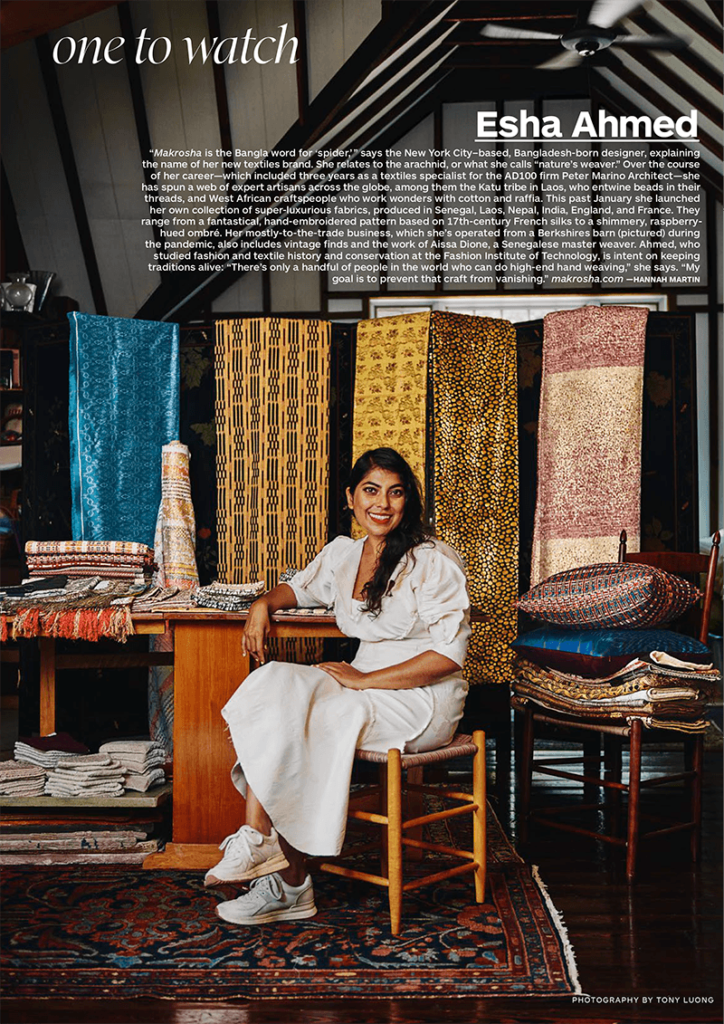
As early as the eighth century, gami stencils cut from washi paper to print kimono fabrics with eye-catching patterns. “There are 1,000-year-old designs that feel so contemporary,” reflects Esha Ahmed, the New York–based textile designer and founder of Makrosha. Her deep dive into the historic tradition has now inspired her first full rug collection, titled Shinki and launched in May. “By the 1800s, they were already blending Eastern and Western influences, a precursor to Art Nouveau and Art Deco,” she explains.
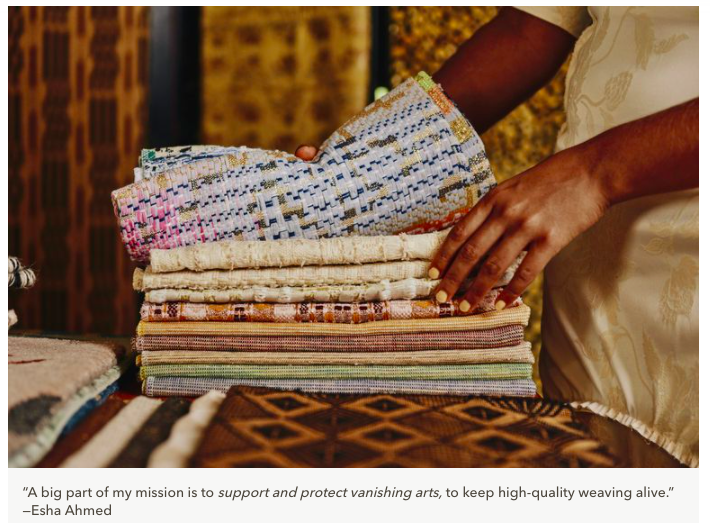
Ahmed, who was born in Bangladesh, has always been attracted to the way textiles document cultural convergences. (Makrosha translates to spider—nature’s weaver—in her native Bengali.) Her new series of nine designs, all hand-knotted in Nepal out of wool and silk, looks specifically to Japan’s Taishō period, from 1912 to 1926, when European and Japanese motifs began to stir together in a rich decorative exchange. Ahmed’s own patterns give those global, turn-of-the-20th-century styles like Japonisme and Art Nouveau a fresh spin.
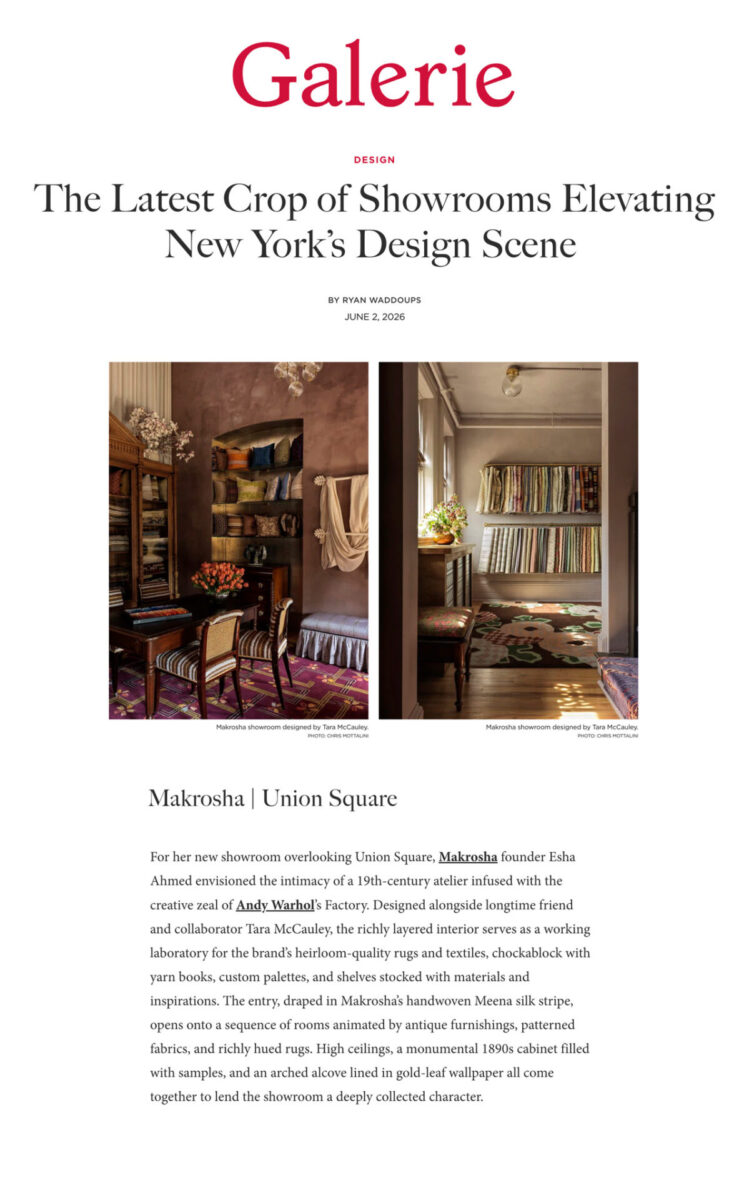
Bloom Matrix and Yuki, for instance, merge graphic grids with stylized blooms; Hana reinterprets Art Deco flora in autumnal colors; and Hasina packs vines and ginkgo leaves into foliage so dense it can behave like a solid. That’s by design. “When you look at some antique rugs, they’re so intricate that they almost read as neutral,” Ahmed explains. Accustomed to working with interior decorators, she often thinks this way, choosing patterns and scales that can layer nimbly in residential spaces. Several are destined for both her own home and her newly expanded Union Square atelier, a collaboration with AD PRO Directory designer Tara McCauley. “Shinki loosely means a fresh start,” Ahmed explains of the Japanese name. “It felt very appropriate.”
—HANNAH MARTIN